


























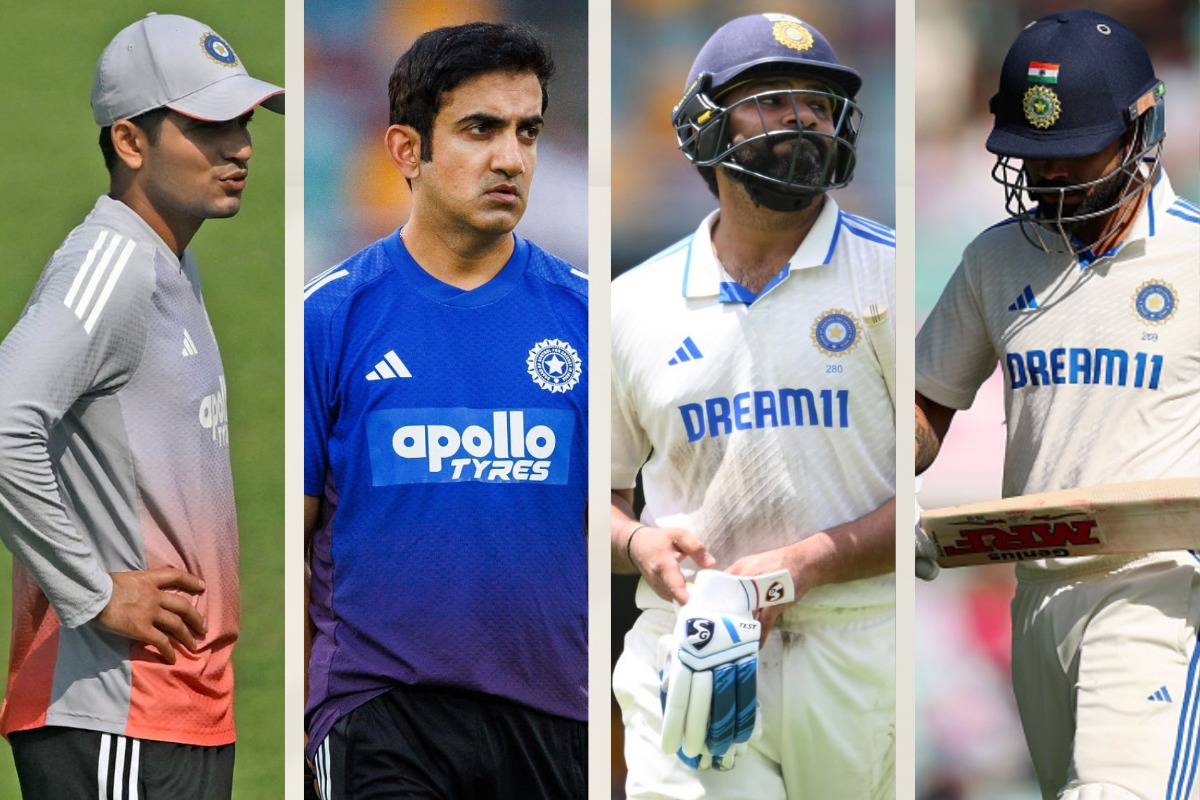
India are in the middle of their worst home Test run in four decades – an extraordinary collapse for a team with unprecedented depth and talent. The problems are several, but the one truth that stands out is that India’s current batting line-up does not play spin as well as its predecessors.
Too much white-ball cricket and not enough domestic or India A cricket has eroded the batsmen’s techniques and patience, and with the head coach Gautam Gambhir intent on playing on spinning pitches at home, the results have been crippling. Preparing rank turners has backfired since Gambhir took over as coach, which is a clear indication that no heed was taken to the mistakes of the previous management. The very skillset that once made India unbeatable at home has gone against them, and visiting teams, much like New Zealand in 2024 and South Africa this year, have provided a template: bring three spinners, pick the best two, and India are no longer unbeatable.
In a year heavy on white-ball cricket, the Indian cricket team played just 10 Test matches and ended 2025 at fifth position on the ICC World Test Championship (WTC) points table. It was a seismic year, in which the BCCI selectors were tasked with picking a team for the next WTC cycle following the retirements of Ravichandran Ashwin in December 2024 and the shock announcements from Rohit Sharma and Virat Kohli, almost in succession, before the tour of England.
It ended with a record 408-run loss to South Africa in Guwahati, which gave the visitors the series 2-0, and further exposed the batting frailties of a transitional Indian team and brought into question the coaching methods of Gambhir. Since Gambhir took over as head coach, India went from staring at a straightforward entry into the 2025 WTC final to losing six of their remaining eight Tests. And now, after losing to South Africa, their task is looking very tough to make it to the next final in 2027.
The upcoming cycles pose further challenges: Afghanistan at home in 2026, followed by Sri Lanka and New Zealand away. More importantly, touring teams now arrive in India believing they can win. India’s Test dominance at home – once a given – is now firmly in question. The transition phase is proving longer, more complicated, and far more costly than anyone anticipated.
India’s year began in defeat at the Sydney Cricket Ground, where stand-in captain Jasprit Bumrah had to pull out on the fourth day with injury, which later needed surgery and saw him miss the Champions Trophy. That match at the SCG proved the final one of Kohli’s Test career, for it was in early May that he followed close on the heels of Rohit by announcing his retirement.
The news surprised many, but not all. Rohit had struggled in Tests for a while, and even dropped himself for the SCG Test, but had also committed himself to touring England. Kohli’s struggles were not as a bad as Rohit’s but somewhere the message had been conveyed to the two seniors: the team was heading in a new direction, and consistency was a premium.
And so, Kohli retired without getting close to 10,000 runs in Test cricket – which a decade ago had looked a foregone conclusion. His tally of 9230 at an average of 46.85 places Kohli at fourth on India’s all-time list of Test run-getters. His 30 centuries are behind only Sachin Tendulkar (51), Rahul Dravid (34) and Sunil Gavaskar (33) who are also the three batsmen above him for most runs.
Rohit’s chequered Test career ended at 4301 runs at 40.57, with 12 centuries in 67 matches.

The defeat in Australia meant that India failed to make it to a third consecutive WTC final. Thus, a new era began in England in June, minus Rohit, Kohli and Ashwin – as well as Mohammed Shami, who looks unlikely to play Test cricket again – and with it plenty of scepticism around how this team under Shubman Gill would fare. Six-odd weeks later, the series ended at 2-2.
It should have been 3-2 to India, if not for a slew of unforced errors during the third Test at Lord’s. Set a target of 193 to win the match, India were all out for 170 – Harry Brook revealed afterwards that a feisty incident on the third evening was the spark for England to show more aggression on the field – but credit to Gill’s team for rebounding and avoiding a series defeat.
After the England tour, India next played Test cricket in October when West Indies arrived. A depleted team was swept 2-0, with India exerting familiar pressure via big totals and wickets to their spinners.
The challenge was always going to be South Africa, and what a tumultuous series it proved to be. The reigning WTC champions arrived in November – after drawing 1-1 in Pakistan – and went on to beat India inside three days on a vicious turner at Eden Gardens and then by 408 runs in Guwahati.
Egos were bruised, reputations sank and Gambhir, under fire for overseeing just seven victories in 19 Test matches, chose to be bullish in his defence of this sorry record so far. India are in transition alright, but do they have the desire to do well in Test cricket? Or are they content in winning ODIs and T20Is?
India’s Test decline is not about personnel. It is about priorities, preparation, flawed selection logic and, apparently, a culture of insecurity. Until those are addressed, no amount of talent – and India have more than ever – will be enough to reverse this spiral.