


























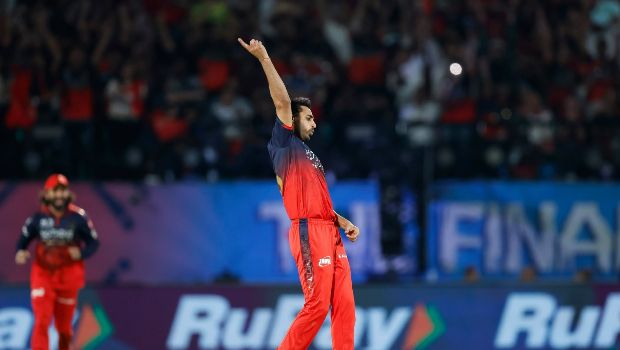
In an IPL season that tilted more heavily towards batters than perhaps any before it, Bhuvneshwar Kumar emerged as a rare exception. While sixes flew into packed stands and teams routinely crossed daunting totals, the veteran seamer reminded everyone that intelligence, skill and experience can still triumph in the shortest format.
Royal Challengers Bengaluru’s successful defence of their IPL title owed much to several contributors, but few were as influential as Bhuvneshwar. The numbers alone tell a compelling story. In 16 matches, he claimed 28 wickets at an average of 17.89 and an economy rate of 7.95. In a season where bowlers often appeared to be little more than cannon fodder, those statistics were exceptional.
What made the achievement even more remarkable was the context. At 36, with his international career seemingly behind him, Bhuvneshwar could easily have faded into the background. Instead, he reinvented himself yet again, adapting to the demands of modern T20 cricket and playing a pivotal role in RCB’s title-winning campaign.
His success was built not on raw pace but on an enviable understanding of the game. Bhuvneshwar used years of experience to stay one step ahead of batters, disrupting scoring patterns and creating opportunities where few seemed to exist. In a format increasingly designed to favour big hitters, flat pitches and short boundaries, he remained relevant by evolving.
That evolution did not happen by accident. After battling recurring back, knee and ankle issues over recent years, Bhuvneshwar has placed greater emphasis on strength and conditioning. The results were evident throughout the season. He looked fitter, sharper and more durable, allowing him to maintain his effectiveness across the tournament.
There have even been whispers of a return to India’s T20 setup. Whether that happens or not, the bigger takeaway is that Bhuvneshwar continues to perform at an elite level in one of the world’s most demanding cricket competitions.

His impact was felt across all phases of the innings. Seventeen of his 28 wickets came in the powerplay, where early breakthroughs can dictate the course of a match. Another nine arrived at the death, highlighting his ability to deliver under pressure at both ends of an innings.
One standout performance came against Mumbai Indians in Raipur. On that occasion, Bhuvneshwar dismissed Rohit Sharma, Ryan Rickelton, Suryakumar Yadav and Tilak Varma, with three of those wickets falling inside the first three overs. As impressive as the wickets were, he also conceded fewer than six runs per over, effectively dismantling one of the tournament’s strongest batting line-ups.
Technically, too, he continued to innovate. His use of the wobble seam became a major weapon, complementing his traditional ability to move the ball both ways. Equally significant was his adjustment at the crease, alternating between bowling wider and closer to the stumps. It was a subtle change, but one that repeatedly unsettled batters.
The playoffs provided further evidence of his value. He dismissed B Sai Sudharsan twice, including a memorable wicket in the final with a cleverly directed bouncer that climbed awkwardly on the batter. It was the kind of dismissal not typically associated with Bhuvneshwar Kumar, and perhaps that is the point.
Even after all these years, he is still finding new ways to surprise opponents—and succeed.