


























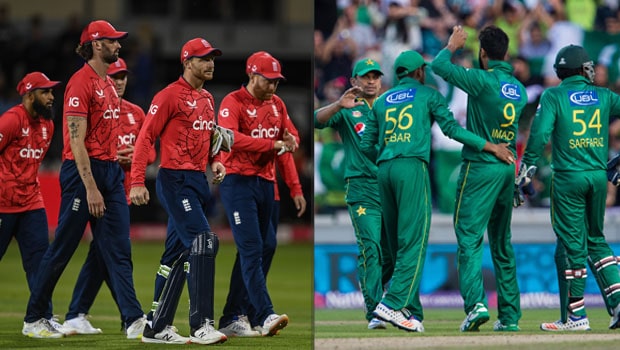
The clash between England and Pakistan shapes up as a defining contest for both teams, albeit for very different reasons. For England, this is about delivering a statement win. They have managed to grind out results, scrapping hard and finding ways to get over the line, but they are still searching for that commanding performance that truly announces their arrival in the tournament. They have not yet produced a complete display, particularly with the bat, and that remains a significant concern. For Pakistan, the context is even starker. Following a washout, this has become almost a must-win fixture. The stakes are high on both sides, and that is what makes this encounter so compelling.
England’s campaign so far has been characterised by resilience rather than dominance. They have fought hard, but their batting unit has not strung together a performance from the outset of the tournament. There has not been a match where the top order has set the tone and carried it through with authority. That lack of fluency with the bat is something they will undoubtedly be addressing behind the scenes. In high-pressure matches against quality opposition, such shortcomings are often magnified, and against Pakistan’s varied bowling attack, any technical or tactical lapses could prove costly.
Conditions play a significant role in shaping how both sides might approach this game. England appear much happier in Sri Lanka, where there is a little more assistance in the pitch for their bowling line-up. The balance of their attack benefits from surfaces that offer something to the slower bowlers and spinners. In these conditions, there are more options available. Harry Brook has the flexibility to manoeuvre his bowling resources with greater freedom. He can turn to Will Jacks at the top and has the potential to call upon Jacob Bethel as well. With six or seven bowling options at his disposal, the workload can be shared more evenly.
By contrast, in India, the balance felt slightly compromised. The bowling unit seemed more heavily reliant on Jofra Archer and Adil Rashid. In Sri Lankan conditions, however, the variety spreads the responsibility. The presence of multiple slower-bowling options reduces the burden on any one individual and allows for tactical adaptability depending on how the pitch behaves. That same principle applies to Pakistan. It would be surprising if Shaheen Shah Afridi did not return to the side, and equally surprising if Abrar was left out. The balance of Pakistan’s team is likely to mirror England’s in terms of approach and composition.
Both teams are expected to lean into similar strategies: taking pace off the ball and utilising spin as a primary weapon. Pakistan, in particular, possess a degree of mystery within their spin department. Usman Tariq will be fascinating to watch, and Abrar brings variation that can unsettle even well-set batters. England may not have the same element of mystery in their spin attack, although Adil Rashid remains the class act. Ultimately, it could come down to which spin unit performs better on the day and which captain outthinks the other in key passages of play.
A crucial factor will be how England’s batters handle Pakistan’s spinners. England’s struggles with the bat have been evident, and this match-up could well determine the outcome. Preparation and homework become vital. In earlier group-stage matches against Italy, Scotland, and Nepal, there was a sense that England may not have been fully clued in to
what they were facing. Against Pakistan’s more nuanced and dangerous spin options, there is no margin for complacency. England’s batters must be absolutely clear about what each bowler is trying to do, how they intend to attack, and what fields are being set. Detailed study of footage, prior experience against these bowlers, and a well-defined plan will be essential.

At the same time, there is a balance to be struck. Being overly predetermined can sometimes hinder natural instinct. Jos Buttler’s form illustrates this tension. He has endured a difficult period with the bat, though he has experienced lean patches before and emerged from them strongly. As a player tasked with helping the side get off to quick starts, even if he initially sits slightly behind Phil Salt, there is an understandable temptation to premeditate attacking options based on expected lengths and fields. While preparation and clarity of intent are important, there is also value in simply watching the ball closely, picking it early out of the hand, and playing with instinct and flair.
Against Pakistan’s spinners, picking the length early will be absolutely crucial. If England’s batters can identify the length quickly, their decision-making improves significantly. Shot selection becomes clearer, and they are less likely to be deceived by subtle variations. Watching the ball closely, rather than being locked into pre-set plans, could make the difference between seizing control and falling into traps.
From Pakistan’s perspective, there are key individuals who will shape the contest. Shaheen Shah Afridi remains central to their plans, particularly with the new ball. Babar Azam has not been performing at the level he would like in the middle overs, and his strike rate has come under scrutiny. England will aim to keep him from playing with fluency. He is still a class act, but restricting his rhythm is vital. I think England will look to pitch Adil Rashid against him. Babar has struggled in past vs Rashid so that might be a good match up for England.
There are also significant threats elsewhere in Pakistan’s batting line-up. Sahibzada Farhan has been in outstanding touch and is, by all accounts, the leading run-scorer in the competition. He poses a real danger to England’s chances. Saim Ayub is another high-class player capable of influencing the game. Even if he has not been at his absolute best, his talent is evident. Pakistan’s depth extends further, with Shadab Khan offering valuable all-round capabilities and Faheem Ashraf providing balance as a very useful all-round cricketer.
In many respects, the sides appear evenly matched in terms of balance and approach. Both will look to exploit spin-friendly conditions, both have multiple bowling options, and both have batting line-ups with the capacity to dominate if they click. I also feel spinners will need to bowl a bit slower on this surface to get most assistance from it.
England may start as slight favourites, but the margin is slim. For England, the objective is clear: produce that long-awaited statement win and dispel lingering doubts about their batting consistency. They have more batting depth and it is a huge plus going into this game. For Pakistan, the equation is simpler but more urgent: secure the victory they desperately need. With so much riding on the outcome, this promises to be a gripping and finely poised contest.