

























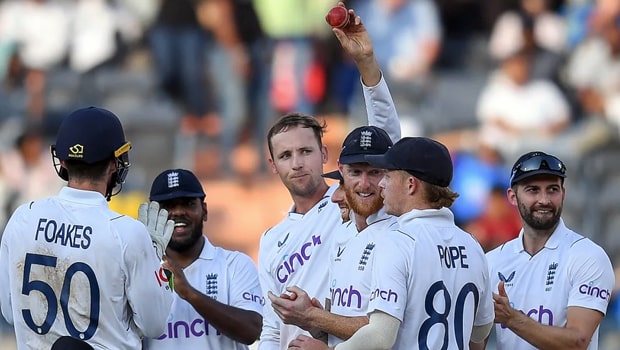
England have reached a point in this T20 World Cup 2026 where it is no longer just about getting over the line — it is about stepping up and imposing themselves with authority. So far, that has not happened. In the last game, they appeared timid and even fearful, which is the opposite of what one expects from England’s current set-up and the brand of cricket they
have played in recent times.
It has not been an easy period overall. The winter in Test match cricket was difficult, but there was a noticeable shift in mood when they toured Sri Lanka. They managed to turn things around in the ODI series there and, more importantly, in the T20s. That turnaround created a genuinely positive feeling around the side. On the back of that, many observers began to speak about England as one of the favourites to win this tournament. Yet, in the matches played so far, they have not looked like a team carrying that status. The style, authority and conviction that underpin championship-winning sides have been missing.
It is still early days. Only a couple of games have been played, and England would still be regarded as favourites to progress through the group. But there is a clear sense that their mentality needs adjusting. The last game against West Indies was particularly disappointing. It was a decent pitch, and there was confidence that England could chase the target down. Instead, they fell short of expectations. In moments like that, when the team is under pressure, attention naturally turns to the senior players.
The responsibility lies with those established names who have been around for a long time. Jos Buttler, with the bat, must lead the way. Jofra Archer, with the ball, must set the tone. Harry Brook, as captain, must drive the side forward. Adil Rashid needs to lead the way in the middle like he did brilliantly v West Indies. These are the players who carry experience and authority, and in a tournament setting, that counts for a great deal.
There will inevitably be nerves within the squad. Scotland have enjoyed some strong moments in previous encounters, and they will not approach this match as though it is merely a free hit. If anything, they may sense vulnerability. England have not been convincing, and that perception alone can embolden an opponent. Scotland will likely feel that this is a genuine opportunity to take advantage.
From England’s perspective, there are areas of concern. Archer, in particular, has not been anywhere near his best with the ball. The bowling combination has also been subject to constant tinkering. The handling of the extra player in the XI has been surprising. Luke Wood played the last T20 in Sri Lanka and featured in the XI vs Nepal in the first game at the T20 World Cup but was subsequently left out after one game. That rotation suggests uncertainty over the balance they want to strike.

The question appears straightforward: do they want a genuine opening bowler, or are they seeking more of an all-round option? The swapping and changing from game to game gives the impression that the management are still searching for clarity. That decision must be made sooner rather than later. For some, Josh Tongue represents the best option. Although he does not play a large volume of T20 cricket, and has only featured in some matches in the format, he is viewed as the best bowler among the available alternatives. Even with the tournament already underway, there is an argument for backing the best bowler. When
weighing up Tongue against Overton and Luke Wood, the view is that the best bowler should play. Whether England will make that change remains uncertain, but it is a decision worth considering.
There is also the factor of venue. England move from Mumbai to Kolkata, while Scotland have already played their first two games there. That familiarity may give Scotland a slight advantage. Conditions, dimensions, and general comfort with the surroundings can make a difference in tight contests. England therefore have plenty to address over the next 24 hours to ensure they are in the right frame of mind and have the right combination in place.
Scotland, for their part, appear confident. They produced a strong performance in their previous outing, scoring 200 runs. George Munsey remains a powerful presence at the top of the order. Michael Jones and Brandon McMullen are both quality players as well. There is particular admiration for Jones, who has been seen frequently over time and regarded as a very fine player. Richie Berrington provides leadership, while Michael Leask, the off spinner, has already taken four wickets and caused problems. Mark Watt offers a left-arm spin option, and there is tactical flexibility within their bowling. They may not open with Michael Leask as they did in the last game; it could instead be Mark Watt who takes the new ball. That capacity to swap and adjust gives them additional options.
Overall, Scotland possess a side capable of competing strongly against England and potentially causing another upset. This makes the contest one to watch closely. The key questions are twofold: how Scotland measure up in direct competition, and whether England can respond decisively.
Of course, the result matters — England will want nothing less than a win. But just as important is the manner of performance. Through their first couple of games, they have not been convincing. The authority, clarity and boldness that once defined them have not yet surfaced. It is time for that to change.