


























Since 2015, New Zealand have consistently found themselves among the contenders in major ICC tournaments. That year, they reached the final of the 50-over World Cup, marking the beginning of a remarkable run of performances on the global stage. Four years later, they once again made it to the summit clash of the same tournament, this time at Lord’s in 2019, only to suffer another heartbreaking defeat, this time to England in one of the most dramatic finals cricket has ever seen. The story did not end there. In 2021, New Zealand progressed to the final of the ICC Men’s T20 World Cup but again fell short, losing to Australia. They have also reached the semi-final stage in other tournaments but have often been unable to push through that final barrier.
Despite these near misses, New Zealand have earned enormous respect for the way they compete at the highest level. Time and again, the Kiwis are described as a team that punches above its weight. Compared to the traditional giants of world cricket, New Zealand operate with a much smaller player base and far fewer resources. Yet they continually challenge the most powerful teams and regularly find themselves deep into tournaments. Their consistency and resilience have become defining features of the side.
Another element that has contributed to the growth of New Zealand cricketers over the last decade and a half is the opportunity to play in one of the biggest leagues in the sport — the Indian Premier League. Over the past 15 years, many New Zealand players have been involved in the IPL, and that exposure has played a role in shaping their development at the highest level. The IPL provides an unmatched platform where players perform under immense pressure, in front of huge crowds and alongside some of the best cricketers in the world.
The financial rewards of the Indian Premier League also act as a motivating factor. For many cricketers, the tournament represents not only a chance to test themselves on the biggest stage but also an opportunity to improve and establish themselves among the game’s elite. The lure
of performing well in the IPL, in a country as vast and passionate about cricket as India — often described as the land of more than a billion people — can be intoxicating. Simply imagining playing in such a competition is exciting for any cricketer, and when that experience is combined with the intensity of an ICC tournament, the stakes become even higher.
Now, with another ICC Men’s T20 World Cup final approaching, the narrative becomes even more fascinating. New Zealand have once again navigated their way through the competition, reaching the semi-final and progressing into the final. At the same time, the team is also in a period of transition. The famous pace combination of Trent Boult and Tim Southee has moved on from the international stage. No player can continue forever, and their departures have opened the door for the next generation. Similarly, Kane Williamson is gradually moving away from the fastest format of the game, creating opportunities for new players to step forward and establish themselves.
This transition is visible at the top of the order, where players like Finn Allen and Tim Seifert now take on key roles. Their presence brings an aggressive and dynamic approach to New Zealand’s batting. When you compare this with India’s batting line-up, the contrast and
excitement become even more compelling. India’s top order is filled with explosive talent, creating a fascinating set of match-ups between the two sides.
India’s batting unit features players capable of dominating any bowling attack. There is Ishan Kishan, known for his attacking style, and the captain Surya Kumar Yadav, whose innovative stroke play has made him one of the most exciting batters in T20 cricket. Hardik Pandya adds another dimension with his ability to float through the order and strike powerfully when
required. Shivam Dube also provides finishing strength, giving India multiple options to accelerate the scoring at different stages of the innings. Altogether, India possess a batting line-up packed with talent and firepower.

The bowling department is equally impressive. Jasprit Bumrah is widely regarded as a once in-a-generation bowler. Some colleagues have even suggested that a bowler of his unique qualities might appear only once in a hundred years. His action, skill and ability to dominate batters in all phases of the game make him truly exceptional. But India’s attack does not rely on him alone. Arshdeep Singh brings swing and variation, while Hardik Pandya contributes as an all-rounder who can deliver with the ball as well. Then there are the spin options, giving India a range of tactical choices depending on the conditions.
The nature of the pitch will play an important role as well. The surface is known to offer bounce and pace, making it one of the quicker pitches among India’s major venues. That characteristic adds another layer of intrigue to the contest, particularly when you consider the fast-bowling resources available to New Zealand. Lockie Ferguson’s pace can trouble any batting line-up, while Matt Henry has returned strongly, even flying back to India shortly after the birth of his child to rejoin the squad.
There are also players like Cole McConchie, whose journey adds an interesting storyline to the occasion. McConchie himself has spoken about feeling like a subcontinent specialist. Opportunities in New Zealand can sometimes be limited for players whose strengths are more suited to conditions found outside their home country. Many of New Zealand’s domestic pitches traditionally favour medium-pace seam bowling, which means players who thrive in subcontinental conditions may not always get the same opportunities at home. For McConchie, performing on a stage like this represents a special moment.
In many ways, New Zealand’s run to the final feels a little like a fairy tale. Earlier in the tournament, South Africa had comprehensively defeated them, yet in the semi-final the situation was reversed. New Zealand bowled first and delivered a performance that gave them confidence and momentum. That victory set up the ultimate challenge — facing the power of India.
When comparing the two sides, the contrast in resources is striking. India’s immense talent pool, strengthened by the influence and scale of the Indian Premier League, stands against the smaller but highly disciplined New Zealand system. For New Zealand, success often depends on executing plans smartly and tactically. They must remain aware, initiate the right strategies and ensure those plans come off. That approach has long been central to their success.
Above all, New Zealand’s greatest strength remains their tenacity. They consistently compete with determination and resilience, refusing to be overwhelmed by the stature or resources of their opponents.
The final itself will take place at the Narendra Modi Stadium, the largest cricket stadium in the world. If filled to capacity, the venue can hold around 120,000 spectators. A packed stadium would create an extraordinary spectacle, turning the occasion into a massive extravaganza. The scale of the venue alone highlights the magnitude of the event.
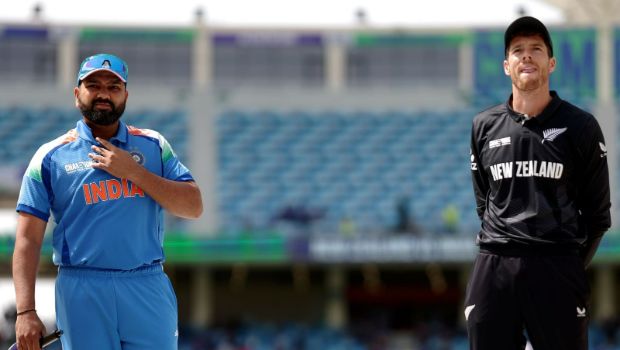
With the boys in blue facing the boys in black, the stage is perfectly set. The atmosphere, the venue, and the contrasting strengths of the two teams promise a compelling contest. It is the kind of occasion that captures the imagination of cricket fans everywhere, and the anticipation of what the cricketing gods might deliver makes it all the more exciting.