


























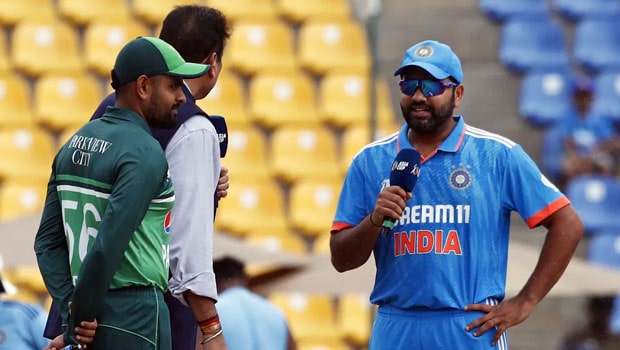
One of the biggest contests in world cricket awaits as India take on Pakistan at the T20 World Cup 2026. India remain favourites, even though they have not played their best cricket in the first two games of the tournament. The results have not diminished their status, but the performances have suggested there is still another level they can reach. That is what makes the upcoming contest so intriguing, particularly with a few lingering questions around team selection and balance.
One of the main talking points has been the absence of Abhishek Sharma. There was still a question mark over him not playing in the previous game. It was interesting to observe how India navigated that situation, especially as they opted for Sanju Samson, with Surya Kumar Yadav mentioning at the toss that Abhishek might be out for a game or two. The phrasing of “a game or two” felt significant. It may simply have been a reflection of his condition, but it also hinted that there was a need to bring Samson into the side, perhaps with an eye on continuity heading into the Pakistan fixture.
I had earlier made a suggestion in my previous article that India should consider playing someone like Washington Sundar if Abhishek is not fit for the next couple of games. I stick to this as India take on Pakistan. The thinking behind this is that when they reach Colombo to face Pakistan, the balance of the side could be better served with another spin option. Conditions in Colombo often bring spin into the contest, and an additional spinner might offer greater control and flexibility. However, it would be difficult for Sundar to suddenly walk into the team without having played, especially after being out injured. It is an appealing idea in theory, but the practicalities make it far from straightforward.
The prospect of using an extra spinner against Pakistan is an attractive one. Yet that approach could mean someone like Arshdeep Singh missing out, leaving India to rely on Jasprit Bumrah, Shivam Dube and Hardik Pandya as the seam options. As always, such decisions are heavily dependent on pitch and conditions. Looking ahead, there is a sense that India might have considered experimenting with that balance in the previous game, but based on how they selected the side against Namibia, it appears that the current combination may well be the one they intend to stick with against Pakistan. That remains to be seen.
Another area that stood out in the last match was India’s fluency when the pace was taken off the ball. When the speed dropped, India seemed to lose some rhythm. That is something they will need to address, because there is unlikely to be a great deal of pace on offer in Colombo. Pakistan’s bowling attack, particularly in those conditions, is expected to lean heavily on spin
and variations. India’s ability to adapt to that will be crucial.
Pakistan, meanwhile, hold a slight advantage in terms of familiarity. They have been playing in Colombo and are not required to travel, whereas India will be moving to a different country, a different ground and a different surface. That shift can have an impact, especially in high-stakes matches where small margins matter.
There are, however, encouraging signs for India. Jasprit Bumrah’s return is absolutely essential. Seeing him back, playing and bowling well, is a major boost. If India are to win this game and potentially go on to win the tournament, Bumrah’s presence and effectiveness will be central. Hardik, too, has looked very strong with both bat and ball. In the previous game
he appeared in great shape, contributing significantly and reinforcing his value as a genuine all-round option.

In terms of form, one minor question mark surrounds Rinku. He looked very good in the recent series against New Zealand and made some important contributions. That said, there is a consideration about team balance. If the players above him in the order perform strongly, Rinku may not have much to do. While he is excellent in the field, the question becomes whether that slot could be used to accommodate an additional spinner, particularly in spin friendly conditions. It is an area worth watching, although it would be surprising if India make that change now, given they had the opportunity to do so earlier. The likelihood is that they will stick with their current approach.
Overall, India’s balance remains a key theme. They have not played their best cricket in the first two games, yet they still possess very fine players who are performing well. That underlying quality keeps them firmly among the favourites.
Pakistan, on the other hand, appear comfortable in the conditions. Sahibzada Farhan has looked very impressive at the top of the order, while Babar Azam has shown signs of regaining fluency, particularly towards the end of his innings in the last game. Their top order is strong, and they have quality through the middle as well. The question is whether they have quite as much batting depth as India. That could be one area where the difference lies. Pakistan’s top order may need to dominate and put substantial runs on the board to offset any perceived gap in depth.
Saim Ayub is another player to watch. Although he has not yet got going in the manner he would like, he remains a dangerous cricketer and a highly capable all-rounder. Pakistan undeniably have top-quality players who can threaten India in all departments.
From a tactical perspective, the previous game offered a significant clue. Pakistan went with one seamer and five spinners. It would be surprising if they moved away from that formula. If they stick with it, the contest is likely to revolve around spin. For India, the challenge will be how they handle pace off the ball and sustained spells of spin, including some unorthodox variations. For Pakistan, it will be about how effectively their spinners apply pressure and exploit the conditions.
In many ways, that is where the game will be decided. Whether the surface plays as a turning track or offers only subtle assistance, spin is expected to play a defining role. That brings the discussion back to India’s team balance and whether they might regret not having an additional spin or pace-off option. For now, it appears they will persist with their chosen combination, but the debate remains relevant.
Everything is beautifully set up for what promises to be a massive encounter. There is also the ongoing situation with Abhishek. Having been out ill and not played for a couple of games, his fitness is a concern. Ideally, he would be fully fit and available, ready to slot back into the side if required. He is a fine player, and his presence strengthens India’s options. However, returning after illness and time out of the XI is not always ideal.
As it stands, India are favourites despite not hitting top gear, Pakistan have a slight edge in familiarity with conditions, and the match appears poised to hinge on spin and adaptability. It is a compelling setup for a high-stakes contest.