


























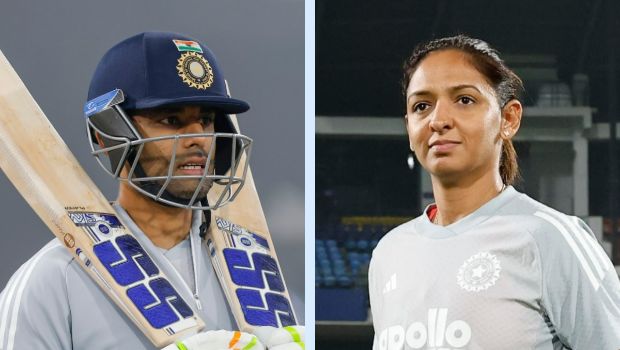
As the new year begins, Indian cricket is bracing for a busy and consequential six-month stretch that will see both the men’s and women’s teams prepare for major global tournaments, starting with a crucial home series against New Zealand and culminating in T20 World Cup campaigns across continents.
India’s international calendar for 2026 gets underway with a home white-ball series against New Zealand cricket team, comprising eight matches across formats. The series opens with three ODIs on January 11, 14 and 18 in Baroda, Rajkot and Indore respectively. These fixtures are significant, as they will be the Indian men’s team’s final ODIs for nearly six months.
Following the ODIs, attention will shift squarely to the shortest format, with five T20 Internationals scheduled between January 21 and 26 in Nagpur, Raipur, Guwahati, Visakhapatnam and Thiruvananthapuram. These matches assume added importance as they represent India’s last opportunity to fine-tune combinations and strategies ahead of the upcoming men’s T20 World Cup.
The men’s T20 World Cup, to be co-hosted by India and Sri Lanka in February and March, will be the centrepiece of India’s first quarter of the year. Led by captain Suryakumar Yadav, India have been drawn in Group A alongside the USA, Namibia, Pakistan and the Netherlands.
With the exception of the high-profile clash against Pakistan, all of India’s group-stage matches are scheduled to be played at home venues, a factor that could prove decisive in their bid to progress deep into the tournament. The World Cup concludes on March 8.
Following the World Cup, international cricket will briefly pause for India, with no fixtures scheduled until June. This window will be dominated by the Indian Premier League, which once again takes centre stage in the domestic calendar.
International action resumes in June and July, when India are slated to host Afghanistan for a one-off Test match and three ODIs. This will be followed by a five-match white-ball tour of England. A previously scheduled tour of Bangladesh, however, currently appears uncertain, with the series in doubt amid deteriorating diplomatic relations between the two countries.

The Indian women’s team, meanwhile, faces a demanding overseas schedule of its own. Their year begins with a tour of Australia from February 15 to March 9, featuring three T20Is, three ODIs and a solitary Test match. This will be India Women’s first Test since June 2024, when Harmanpreet Kaur’s side registered a comprehensive 10-wicket victory over South Africa in Chennai.
Following the Australia tour, India Women will travel to England, with three T20Is scheduled across May and June, before a one-off Test match at Lord’s from July 10. The gap between formats is deliberate, accommodating the marquee event of the women’s calendar.
The Women’s T20 World Cup will be held in England from June 12 to July 5, and expectations around the Indian team are understandably high. Having recently claimed the ODI World Cup, Harmanpreet and her team enter the T20 edition with renewed confidence and growing belief.
India also have positive recent memories in England, having beaten the hosts in both T20I and ODI series on their previous tour – results that will further bolster optimism heading into the global tournament.
Taken together, the next six to seven months represent a defining phase for Indian cricket across both men’s and women’s formats. With home advantage, major ICC tournaments, and key overseas tours on the horizon, performances during this period are likely to shape narratives and selection debates well beyond 2026.
For fans and stakeholders alike, the calendar promises sustained intrigue – and the possibility of silverware on multiple fronts.