


























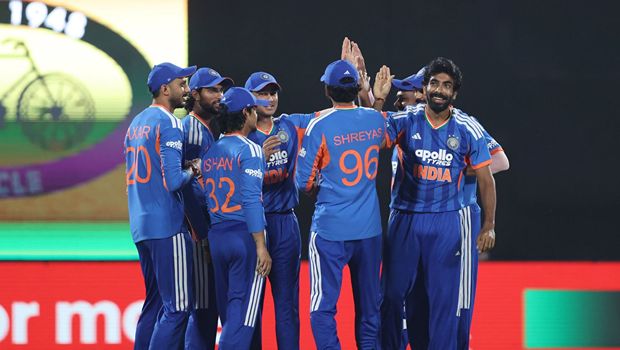
India may have completed a comfortable 3-0 T20I series sweep against Afghanistan, but there was enough in the three matches to offer a few pointers about where this team is headed particularly with the 2028 T20 World Cup and Los Angeles Olympics on the horizon.
Here are my five big takeaways.
One, Abhishek Sharma and Sanju Samson look firmly established as India’s preferred opening combination.
Abhishek was the standout batter of the series, topping the run charts with 229 runs at a remarkable strike-rate of 269. That included his stunning 30-ball century, an innings that underlined just how destructive he can be at the top of the order.
Samson, meanwhile, appears to have shrugged off his lean period. Two fifties at a strike-rate of 180 suggest that he is still very much part of India’s plans.
And that also tells us something about Vaibhav Sooryavanshi. Despite all the excitement surrounding the teenage batting prodigy, the team management clearly does not yet regard him as the finished product.

Two, Jasprit Bumrah’s role is evolving — and that is perfectly fine. Bumrah may bowl slower and take fewer wickets as he manages his workload and body, but his value to India remains enormous. Against Afghanistan, his ability to bowl at 130-plus kph while relentlessly creating dot balls showed that he does not need to operate at 140-plus to dominate.
Three, how long can India continue investing in Varun Chakravarthy? At 35, and with fitness concerns, the selectors have to consider whether Ravi Bishnoi deserves a longer run in the side instead.
Four, Tilak Varma remains something of a misfit in this middle order. Twenty runs at a strike-rate of 86 while batting at No. 5 simply isn’t enough, particularly in a team built around aggressive batting.
And finally, five: India still have a Hardik Pandya-sized hole in their bowling attack. Shivam Dube cannot quite replicate what Pandya offers, while Nitish Reddy, despite taking six wickets in the series, does not yet look like a genuine fifth bowler.
The 3-0 scoreline was emphatic. But for India, the bigger questions are about what comes next.