


























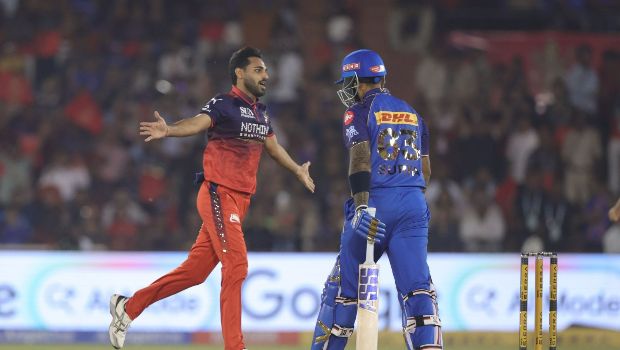
Before the IPL season began, Mumbai Indians looked, at least on paper, like a side built for a deep run into the playoffs. There was experience, explosive batting, a varied bowling attack, and enough match-winners to intimidate almost any opponent. When they began the campaign by chasing down 221 against KKR — their first opening-match win in the IPL since 2012 — it only reinforced the belief that this could finally be the season where MI returned to their dominant best.
What followed instead was one of the most disappointing campaigns in the franchise’s history.
Mumbai now find themselves languishing near the bottom of the points table, with just two more wins from their next ten matches after that opening victory. Their playoff hopes were officially extinguished following defeat to RCB in Raipur, and instead of discussing qualification scenarios, MI are now fighting merely to avoid a last-place finish.
So where exactly did things go wrong?
The first and most obvious reason was the poor form of several key players — including some of the biggest names in the squad. Chief among them was captain Hardik Pandya. Expected to lead from the front both with bat and ball, Hardik endured a nightmare season. His returns with the bat were modest (146 runs in eight innings) and his bowling lacked penetration and control, often leaking runs at crucial stages. He too, for the record, only four wickets while conceding runs at almost 12 per over.
For a side already struggling for momentum, their captain’s inability to consistently influence matches proved deeply damaging.
The batting unit, overall, never quite clicked. Suryakumar Yadav, once of the most dangerous T20 batters in the world, tallied 195 runs in 11 innings. Tilak Varma managed one brilliant century, but beyond that failed to provide the consistency MI desperately needed in the middle order. Too often, their batting looked like a collection of individual cameos rather than a cohesive unit capable of dominating opposition attacks.

The bowling, meanwhile, fluctuated between underwhelming and outright ineffective. Shardul Thakur proved expensive. Deepak Chahar failed to make the impact expected of a senior new-ball bowler. Trent Boult, usually such a reliable wicket-taking option upfront, had an especially disappointing campaign.
But perhaps the most surprising decline came from Jasprit Bumrah.
Widely regarded as one of the finest T20 bowlers of his generation, Bumrah never looked quite himself this season. It took him five matches to claim his first wicket, and even though there were spells where he bowled with discipline and control, the overall impact simply was not there. His pace appeared slightly down, and there were matches where batters handled him far more comfortably than one would normally expect. While some have argued that teams merely chose to play him cautiously, that explanation feels too convenient. By Bumrah’s own extraordinarily high standards, this was a disappointing campaign.
Injuries only compounded Mumbai’s problems. Rohit Sharma missed six games, Hardik himself sat out consecutive matches late in the season, and Mitchell Santner was ruled out midway through the tournament. Constant disruption meant MI never truly settled on a stable combination.
Then came the tactical errors. Hardik’s handling of Bumrah occasionally raised eyebrows, particularly the failure to consistently give him the first over. Against RCB, Surya’s decision to trust Raj Bawa with the final over also backfired badly. Across the season, several key moments seemed to slip away because of questionable on-field calls.
Mumbai now have three games left to salvage some pride from an otherwise disastrous season. But for a franchise accustomed to setting standards rather than collapsing beneath them, this campaign will provoke some uncomfortable questions — about leadership, squad balance, tactics, and whether this once-dominant giant is entering a far more uncertain era.