

























One Jasprit Bumrah pulls up with a niggle, and India’s bowling attack falls to shreds.
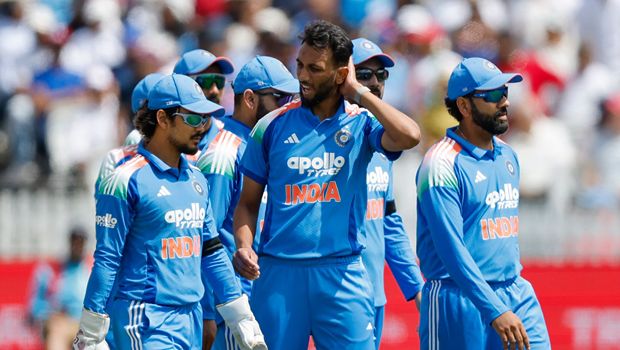
England’s 387/3 in the third ODI at Lord’s was more than just an imposing total. It was a stark reminder of how heavily India continue to depend on Bumrah to hold their attack together. With Gurnoor Brar conceding 97 from his 10 wicketless overs and England smashing 82 off the last five overs, India’s lack of penetration and control was laid bare.
The obvious question now is whether this was simply a bad day at the office or a warning sign ahead of next year’s ODI World Cup in South Africa.
Cricket has a habit of throwing up worst-case scenarios. If Bumrah were to struggle with fitness again, and if Hardik Pandya were to suffer another injury setback, who exactly does India turn to with the new ball and in the death overs?
As things stand, it appears the selectors are looking at four specialist fast bowlers, fitness permitting, for the World Cup: Bumrah, Mohammed Siraj, Harshit Rana and Prasidh Krishna. Brar remains an outside contender but still has plenty to prove in ODI cricket. The management will also hope Pandya remains fit and that Nitish Reddy develops into a more dependable bowling option, giving India additional balance.
There is logic behind resting Siraj for this short three-match ODI series. Given his importance in Test cricket, workload management is understandable. It also offered India the chance to assess other seam-bowling options. The concern, however, is that none of those alternatives have truly looked ready to shoulder the responsibility if one of the frontline bowlers is unavailable.

That naturally raises a few uncomfortable questions. Is this a tactical issue? A planning issue? Or is the team management being too stubborn in sticking with a particular combination?
I understand why Kuldeep Yadav has been left out. Without Pandya and Reddy providing pace-bowling all-round options, the management clearly worries about batting depth. That is why India have preferred playing two spin-bowling all-rounders in Axar Patel and Washington Sundar, while also trying to extract overs from Shivam Dube’s medium pace.
But when Bumrah himself is unavailable, I believe the equation changes.
At that point, India need proven wicket-takers more than they need additional batting insurance. Kuldeep has repeatedly shown that he can break partnerships and change games, particularly during the middle overs — precisely the phase where India looked toothless at Lord’s.
England’s innings exposed more than just an off day. It highlighted how quickly India’s bowling resources begin to look thin once Bumrah is removed from the equation. With the World Cup now on the horizon, finding reliable support for their premier fast bowler should become one of the selectors’ biggest priorities.