

























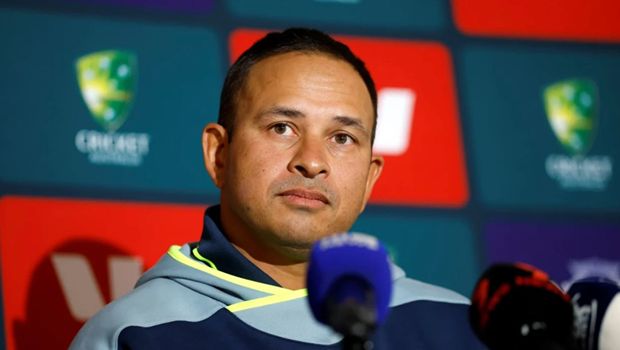
The 2018 Sandpapergate scandal has returned to haunt Australian cricket, this time through the pages of Usman Khawaja’s new autobiography, Sabr: Finding My Way in Cricket and Life.
Khawaja has made a startling claim that the infamous ball-tampering episode during Australia’s tour of South Africa was not the work of just three individuals, but something the entire team knew about.
According to the former Australian opener, the use of sandpaper to alter the condition of the ball was discussed and attempted even before the infamous Cape Town Test, during the second Test at Port Elizabeth. He claims Cameron Bancroft volunteered to use sandpaper, while discussions about the tactic involved a wider group of players.
Khawaja also says he wanted the team to accept collective responsibility, rather than allowing three players to shoulder the consequences. Ultimately, Steve Smith and David Warner received 12-month bans, while Bancroft was suspended for nine months.
Interestingly, David Warner has publicly backed Khawaja’s version, calling his account 100 per cent accurate. That endorsement adds considerable weight to the debate, particularly given Warner’s central role in the original controversy.
However, not everyone agrees.
Former Australia coach Darren Lehmann has questioned Khawaja’s assertion that everybody knew about the sandpaper plan. While acknowledging that ball-tampering had been a part of international cricket for decades, Lehmann maintained that this did not mean every player was aware of the specific tactic.

Mitchell Starc has also stood by the Australian bowlers’ earlier position. He reiterated that the bowling group did not know a foreign substance had been taken onto the field until they saw the images on the big screen at Newlands. Starc also said he had no knowledge of the alleged sandpaper use at Port Elizabeth.
Meanwhile, Cricket Australia chief executive Todd Greenberg has made it clear that the governing body has no plans to reopen its investigation. CA remains comfortable with its original findings, despite the conflicting accounts.
And that is perhaps the most significant aspect of this latest controversy.
Khawaja’s revelations are not necessarily proof that the original investigation was wrong. But they raise an uncomfortable question about accountability within one of cricket’s most powerful teams.
If his version is accurate, were Smith, Warner and Bancroft made to carry the burden of a much wider team failure?
Eight years on, Sandpapergate remains more than a story about sandpaper and a cricket ball. It is a story about leadership, dressing-room culture, accountability and the difference between individual punishment and collective responsibility. And perhaps the biggest unanswered question is whether we ever really got the complete story in 2018.