


























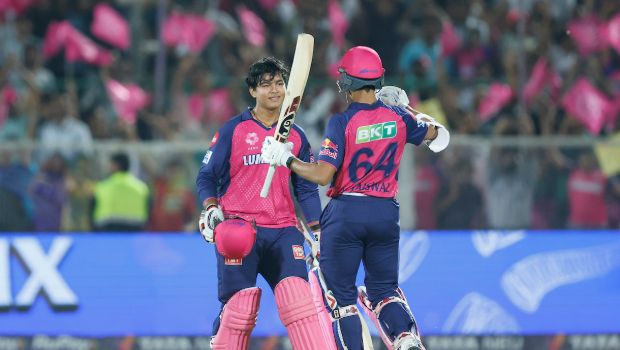
Vaibhav Sooryavanshi’s story can essentially be viewed in two parts. The first is where he stands right now in his career, and the second is how he handles everything that is inevitably going to come with his rapid rise to prominence.
Starting with the cricketing side of things, what Vaibhav has achieved at just 15 years of age is nothing short of extraordinary. He embodies many of the qualities that define the modern cricketer—fearless, instinctive, confident and full of flair. What stands out most is not simply the volume of runs he has scored, impressive as those numbers may be, but the circumstances in which those runs have come.
Statistics can often tell only part of the story. More revealing is the timing of those performances. The IPL numbers are remarkable in themselves, but it is his performances in the knockout matches that offer the clearest insight into his temperament and character.
The couple of scores in the nineties during crucial knockout encounters demonstrated his ability to thrive under pressure and perform on the biggest occasions. They showed that he is capable of approaching high-stakes matches with the same freedom and confidence that he displays in less demanding situations.
What makes his rise even more remarkable is the confidence and self-belief he has shown while facing some of the best bowlers in the world. For someone so young to take on elite international-calibre bowling attacks with such conviction is extraordinary. It has been a joy to watch, and it is undoubtedly a positive development for the game itself.
Of course, there will inevitably be challenges ahead. Every young player encounters difficult periods at some stage of their career. However, it is encouraging that he has already earned a place in the Indian setup. Given what he has achieved over the last couple of years, that selection felt almost inevitable.
His inclusion also highlights the extraordinary depth of talent available to India. The competition for places is so intense that the selectors appear prepared to leave out players who, not long ago, were among the most influential figures in the format. It underlines just how strong India’s resources are in T20 cricket.
It will be fascinating to watch how Vaibhav’s journey develops from here. The opportunity to tour England is an exciting next step in his progression. There will undoubtedly be some observers who argue that English conditions will present a much tougher challenge. While there may be some truth in that assessment, modern T20 wickets in England are generally
very good for batting and often favour the batters. As a result, conditions alone are unlikely to have a dramatic impact on his game.
The greater challenge may eventually come from the mental side of the sport. Every player experiences periods when things do not go according to plan. There will be times when performances dip, expectations rise and results become harder to achieve. At that stage, the mind can become a player’s greatest challenge, particularly for someone so young. Having the right people around him will be crucial. It appears that he already has a strong support system, but maintaining that environment will become increasingly important as he continues to play around the world.
When looking at his career so far, there is a clear pattern that stands out. He has repeatedly delivered when the stakes have been highest. During the U19 World Cup, for example, he performed reasonably during the group stages before producing a match winning innings of 175 in the final. He dominated the biggest game of the tournament, earned the player-of-the-match award and confirmed his credentials when it mattered most. Once again, that speaks volumes about his temperament and character. Those qualities are significant positives for any young cricketer.
Another aspect of his game that stands out is the instinctive nature of his batting. There is certainly thought behind what he does, but there does not appear to be any tendency to overthink. Watching him play live, it is evident that he is not constantly premeditating his movements or deciding in advance where the ball is going. Instead, he watches the ball carefully and reacts accordingly. His extensive range of shots allows him to adapt to different deliveries and situations.
The fact that he has demonstrated this ability against some of the world’s best bowlers only strengthens the belief that his game can succeed in different conditions and against different attacks. There will naturally be adjustments to make along the way, as every young player experiences, but there is every reason to believe he can handle those challenges successfully.
Based on what has been seen so far, there is every expectation that he can enjoy a successful tour of England. There is also a strong possibility that he will open the batting. From a purely cricketing perspective, the signs are extremely encouraging.

However, the second part of the story may ultimately prove even more important than the first.
The bigger question concerns how he handles fame, fortune and a life that is changing at incredible speed. These are the aspects that remain uncertain because they are
impossible to predict. How he responds personally, and how the people around him manage those changes, will play a significant role in shaping his future.
At this stage, there is no reason to view those challenges negatively. Everything should be approached with optimism. Nevertheless, the pressures associated with sudden fame and success can be considerable. The technical side of his batting appears solid, but maintaining the right mindset over a long period may be the greater challenge.
The mind will be the key factor. Confidence, self-belief and mental resilience will all become increasingly important as expectations continue to grow. Once doubts begin to creep in, performances can become more difficult. While there is confidence that he can master those challenges, there may inevitably be periods when the mental demands of the game become more difficult to navigate.
Looking at the broader picture beyond Vaibhav, Shreyas’ selection is another fascinating aspect of the discussion. It offers an insight into just how competitive elite sport can be, particularly in Indian cricket.
Only a few months ago, India lifted the T20 World Cup. At that point, Surya Kumar Yadav was widely regarded as one of the very best players in the format, if not the best. Yet after a disappointing tournament, he finds himself not only out of the side but also removed from the captaincy. The speed with which fortunes can change at the highest level is remarkable.
I admire Shreyas Iyer and his captaincy and believe that he will do an excellent job as captain. The reality is that India possess an abundance of quality options, with several individuals capable of leading the side successfully. At the same time, there is sympathy for Surya because it is undoubtedly a difficult situation to experience after the success he enjoyed only months earlier.
His underwhelming IPL campaign can largely be attributed to fatigue and the emotional toll of winning a World Cup. The transition from the celebrations and intensity of a global triumph straight into another major tournament is not easy. Several players who were part of that World Cup-winning squad appeared to face similar challenges.
Ultimately, this situation serves as a reminder of how demanding elite sport can be. Players are constantly required to adapt, respond and prove themselves again. Surya will now need to adjust and work his way back.
That observation should not be viewed as criticism of Shreyas. On the contrary, there is genuine confidence that he will excel in the role. In truth, whichever combination India select for their final XI, they remain the strongest team in the world at the moment. It is
difficult to see any other side surpassing them currently, and that is what makes the upcoming series against England such an exciting prospect.