


























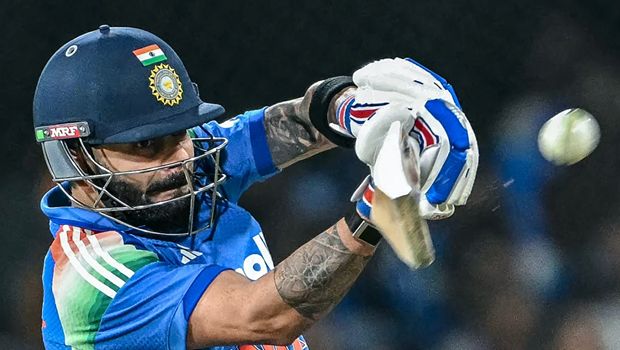
The next ODI World Cup is still 15 months away, but for countless Indian cricket fans, the journey truly begins today.
When Virat Kohli walks out to bat in the first of three ODIs against England in Birmingham, it will instantly elevate the significance of a bilateral series that might otherwise have struggled for attention in a packed sporting calendar. With Wimbledon reaching its climax, football dominating headlines and India’s disappointing T20I tour of the United Kingdom still fresh in the memory, these three matches may not appear particularly consequential on paper.
But when Kohli is involved, the equation changes.
At this stage of his career, Kohli is a rarity in international cricket. He plays only one format for India, appears only a handful of times each year and has carefully managed his workload. Having relocated to London, he now spends some of his time training at Lord’s, away from the relentless spotlight that has followed him for nearly two decades.
His last competitive appearance came in the IPL final, where an unbeaten 75 guided Royal Challengers Bengaluru (RCB) to a second successive title. It was another reminder that even at this stage of his career, Kohli remains one of the game’s premier match-winners.
He was expected to feature in last month’s ODI series against Afghanistan, but an injury sustained during the IPL final delayed his return. For many players, such interruptions can disrupt rhythm and momentum. Kohli, however, has repeatedly shown that long breaks do little to diminish either his hunger or his standards.
His recent record underlines that point emphatically.

During RCB’s back-to-back title-winning campaigns, Kohli was once again the franchise’s leading run-scorer, while also evolving his game with a noticeably improved strike-rate. More importantly for India, he has scored three centuries in his last six ODI innings, proving that the format which has defined much of his international greatness remains as natural to him as ever.
That is precisely why this series carries greater significance than the fixture list might suggest.
India’s preparations for the next World Cup are only beginning, and while the selectors will be evaluating combinations, youngsters and middle-order options, Kohli’s role requires little discussion. His challenge is not to cement his place, but to build rhythm, accumulate runs and ensure that when the World Cup arrives, he is once again operating at peak efficiency.
For Indian supporters, these matches offer something equally compelling: the opportunity to watch one of the greatest ODI batters in history return to the format he has dominated for over 15 years.
Three bilateral ODIs may not define India’s World Cup campaign. But for Kohli, they represent another opportunity to do what he has done better than almost anyone else in cricket history — rule the 50-over game.