


























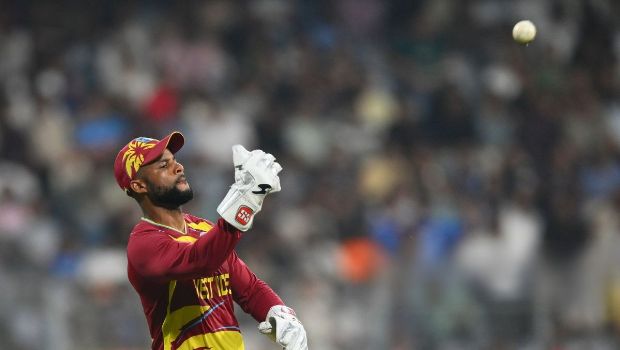
The West Indies have made a quick switch from the massive Caribbean Premier League campaign in T20 cricket to 50-over cricket, and they now find themselves facing a powerful Indian side in India. The change in format brings its own challenges, and looking at the West Indies line-up, the demands of 50-over cricket appear particularly significant.
The West Indies managed to post 295 in the first ODI, which, on the surface, is not a bad total in a 50-over game. However, in the modern era, scoring runs has become such an integral part of the game that totals around the 300- mark do not necessarily provide enough security, particularly when playing India on their own turf. Against a strong Indian side, the West Indies arguably needed to be closer to the 350-mark if they were to put the hosts under serious pressure.
There were certainly some positives for the West Indies with the bat. I am particularly pleased for Justin Greaves, who scored a century. There was also Amir Jangoo, who had done very well in the final of the Caribbean Premier League and remained unbeaten on a score in the 50s. He followed that up with another 58 here, providing another useful contribution for the West Indies.
However, those individual performances were not enough to provide the kind of impetus and dynamism that the West Indies needed. The contributions were there, but the overall batting effort lacked the momentum required to put India under sustained pressure. That becomes particularly important when the opposition has a strong batting line-up capable of chasing down substantial totals.
Looking further down the West Indies order, Roston Chase is another player who stands out. He has increasingly become more of a bowling all-rounder, whereas he is a very good and talented player who can contribute significantly with the bat as well. The West Indies will need more runs from players such as Chase if they are going to challenge India effectively in this series.
Shai Hope also missed out, while Keacy Carty and John Campbell will need to make bigger contributions. These are the players who will have to produce substantial scores if the West Indies are going to put India under the kind of pressure required in a 50-over contest.
One of the major challenges for the West Indies will be dealing with India’s spin. Traditionally, the West Indies have struggled against good wrist spin, and that is another dynamic that could become important as the series progresses. Against a bowler such as Kuldeep Yadav, the West Indies batters will have to find ways to deal with the challenge posed by quality wrist spin.
That has been an area where the West Indies have struggled in the past, and they will need to address it if they are going to compete strongly against India. It is not simply about getting through the overs; they need to find a way of scoring runs and maintaining momentum against that type of bowling.
At the same time, the West Indies have their own bowlers who can make an impact. The likes of Jayden Seales, Matthew Forde and Alzarri Joseph are very talented and capable bowlers. In conditions that are more helpful to them, they can certainly make an impact, although bowling in India presents a different challenge.
The West Indies will need their pace attack to provide the kind of movement, bounce and pressure that can restrict India’s powerful batting line-up. They will also have to make the most of their opportunities because playing India in these conditions leaves little room for a lack of consistency.

For India, the match was another positive step towards building for the next World Cup, which is just over a year away in southern Africa. There is a clear sense of preparation and building within the Indian side, and the presence of some of their experienced players adds another dimension to that process.
The old boys are still there, with Rohit Sharma and Virat Kohli targeting that next World Cup and continuing to want to play. Kohli’s 139 not out was another reminder of the kind of contribution he can make. The man seems to go on forever, and his innings was a significant part of India’s performance.
Shubman Gill, the captain, also scored a century, which adds further encouragement for India. Having Gill contributing with the bat alongside Kohli makes for a strong combination, and the performances of the two players bode well for what could be a very strong series for India.
For India, therefore, this series is also an opportunity to get a really good workout as they continue to build towards the next World Cup. The performances of the established players and the contributions from the wider line-up will be important as they continue that process.
The West Indies need more runs from the middle and lower parts of their batting order, particularly from players such as Roston Chase, Shai Hope, Keacy Carty and John Campbell.
Gudakesh Motie could not get a wicket in this game, which also highlights how difficult the conditions can be for the West Indies bowlers. When you are two wickets down while chasing 300, it demonstrates the size of the task facing the West Indies. India were able to put themselves in a strong position, and the West Indies were left with a difficult chase.
Ultimately, this first game has shown the contrasting challenges facing the two sides. India have begun the series with the kind of performances that give them plenty of encouragement as they build towards the next World Cup. Kohli’s 139 not out and Gill’s century provide particularly strong signs for the hosts.
The West Indies, meanwhile, have plenty to work on. They have talented players and showed glimpses of what they can produce, but they need greater consistency and more substantial contributions from their key batters. The performances of Greaves and Jangu were useful, but the team needs more players to turn those starts and individual contributions into a much stronger collective batting effort.