

























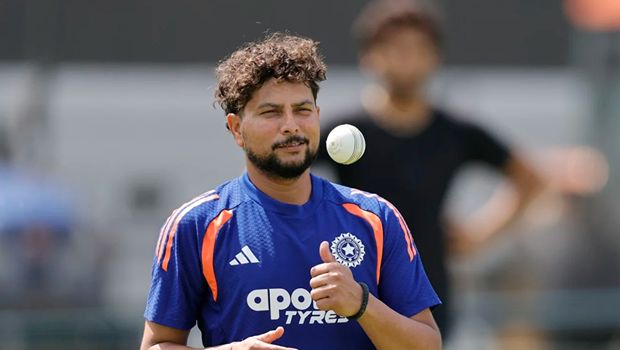
Here’s a pop quiz: Who is the only specialist bowler in India’s T20 International history to average two wickets per match, among those who have played at least 10 games?
The answer is Kuldeep Yadav.
It is a remarkable statistic, particularly when you consider that India have played T20I cricket for nearly two decades. Yet, despite his outstanding record, the left-arm wrist-spinner continues to find himself on the fringes of India’s preferred T20I combination.
Kuldeep has taken 98 wickets in 56 T20Is at an average of 14.2, with an exceptional bowling strike-rate of 11.9 and an economy rate of seven runs per over. Those numbers make a strong case for his inclusion, particularly in a format where wicket-taking ability can be just as important as containing runs.
So what is keeping him out?
Is Hardik Pandya’s absence forcing the team management to prioritise all-rounders? Is Gautam Gambhir placing too much emphasis on batting depth? Or is the management overlooking the value of a specialist bowler who has consistently demonstrated an ability to take wickets?

India’s recent bowling performances make these questions even more pertinent. The team have conceded six totals in excess of 200 this year, along with four more above 180. While batting-friendly conditions and the demands of T20 cricket must be taken into account, such numbers suggest that the bowling attack needs to be examined closely.
India’s preference for an extra batter or an all-rounder may offer flexibility, but that approach comes at a cost if the team lacks enough wicket-taking options. Sometimes, the solution is not to strengthen the batting further, but to give the bowlers a better chance of controlling a game.
Kuldeep may not feature in India’s next match in New Zealand, but the team management must find a way to accommodate him more regularly.
When a specialist bowler boasts numbers like his, leaving him out deserves an explanation. And with India’s bowling under scrutiny, perhaps it is time to reconsider the balance of the playing XI.