

























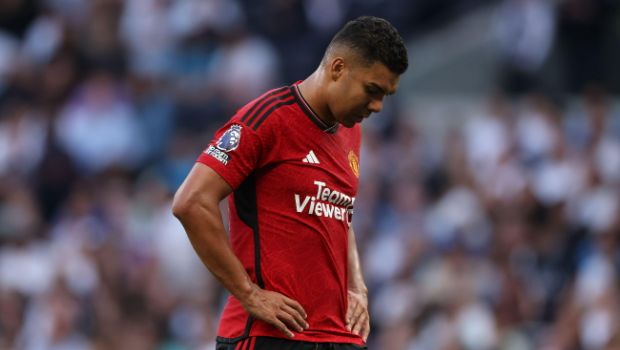
The Brazilian midfielder has made it clear that his time at Manchester United is coming to an end—and more importantly, that there is no scenario in which he changes his mind. Despite a late push from supporters and an improvement in his performances, the decision has already been taken and, in his own words, finalized.
Casemiro’s announcement didn’t come out of nowhere. Earlier in the year, he confirmed his intention to leave Old Trafford once the season concludes. At the time, it felt like a routine career move—an experienced player entering the final phase of his journey.
What has changed since then is context.
His performances have improved, the team’s dynamic has stabilized under new leadership, and fans have responded. During a recent win, chants of “one more year” echoed around the stadium, a clear attempt to convince him to reconsider.
But Casemiro has shut that door.
He has acknowledged the connection with supporters and admitted that leaving will not be easy emotionally. However, he also made it clear that the decision is not up for discussion anymore. In professional terms, that’s significant. Players at this level often leave room for negotiation, especially when form turns in their favor.
Casemiro hasn’t.
Part of that certainty comes from contractual clarity. His deal included a performance-based extension clause, which could have automatically prolonged his stay. Instead, both player and club agreed to remove that option, eliminating any ambiguity about his future.
Financially, this also makes sense. Casemiro is among the highest earners at the club, with a salary reportedly exceeding $400,000 per week. For Manchester United, restructuring the wage bill is a priority. For the player, it opens the door to new opportunities without contractual complications.

And those opportunities are already on the table.
Interest from Major League Soccer and the Saudi Pro League suggests that his next move could involve a lucrative deal, potentially in the range of $20 million annually depending on the destination.
What makes this situation more interesting is the timing of his resurgence. Since the managerial change at the club, Casemiro has looked closer to the version that once dominated midfields in Europe.
Working under a coach who understands his role has helped. The communication has been clearer, the system more balanced, and his responsibilities better defined. As a result, his influence on the pitch has grown again.
Yet, even with that improvement, his departure remains unchanged.
From a strategic perspective, this could benefit both sides.
Manchester United are entering a transitional phase. The squad is evolving, tactical approaches are shifting, and recruitment priorities are being reassessed. Moving on from a high-profile, high-salary player allows the club to reinvest in areas that align with their long-term vision.