

























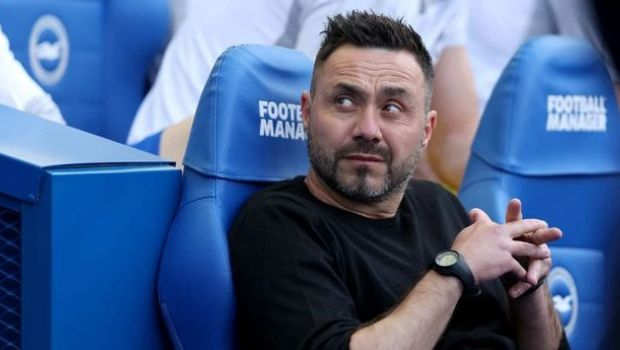
Tottenham Hotspur have made another bold move in a season defined by instability. This time, they’ve turned to Roberto De Zerbi—a coach known for his tactical identity and ability to elevate teams.
But this is not a long-term project in its early stages. This is a rescue mission.
Spurs are dangerously close to the relegation zone, and with only a handful of games remaining, every decision carries immediate consequences. De Zerbi arrives with a strong reputation, but also with a challenge that could define his career.
And despite the uncertainty, he has already made one thing clear: he is staying, regardless of what happens.
De Zerbi’s return to English football comes under unusual circumstances.
After previously establishing himself as one of the league’s most progressive coaches, he was widely expected to take his next job in a more stable environment—ideally at the start of a new season. Instead, Tottenham convinced him to step in during one of the most chaotic periods in the club’s recent history.
The urgency explains the terms.
Spurs have committed to a five-year deal, reportedly worth more than $12 million per season, placing De Zerbi among the highest-paid managers in the league. That level of investment signals belief, but also desperation.
Tottenham have already gone through multiple managerial changes this season. Each shift was meant to stabilize results, yet the team continues to struggle. The latest dismissal came after a short-lived spell that failed to produce the necessary turnaround.
Now, De Zerbi inherits a squad low on confidence and short on momentum.

The numbers tell part of the story. Tottenham are just one point above the relegation zone, with seven matches left to play. Even more concerning, they have yet to secure a league win in 2026. That run has turned what was once a mid-table campaign into a survival battle.
What separates De Zerbi’s arrival from previous appointments is not just his profile, but his message.
In his first interview, he addressed the biggest concern directly: relegation.
Rather than avoiding the topic, he embraced it. He stated that he would remain in charge next season “no matter what,” a declaration that immediately changes the narrative around his appointment.
Managers rarely commit to that level of certainty, especially when the possibility of dropping to the Championship is real.
It also places responsibility back on the players.
De Zerbi has emphasized confidence as a central issue. He believes the squad has the quality to avoid relegation, but that unlocking it requires mental reset as much as tactical adjustment. His approach will likely focus on restoring belief while implementing his preferred style of play—a possession-based system that demands structure and discipline.
The challenge is timing.
There is limited space to experiment, and immediate results are required. Balancing those two realities is one of the hardest tasks a manager can face.