
























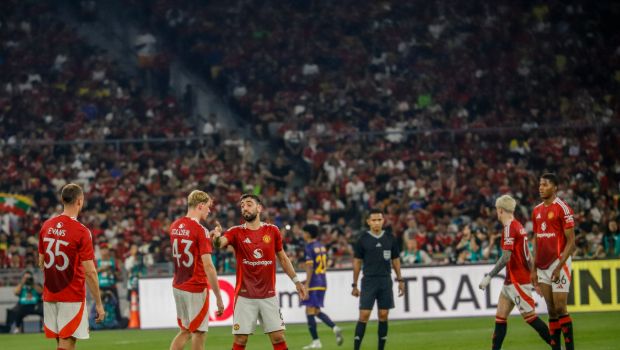
For decades, Old Trafford has stood as one of football’s most recognizable venues. Known as the “Theatre of Dreams,” the stadium has hosted historic matches, legendary players, and unforgettable moments. Yet modern football has evolved rapidly, and infrastructure that once represented the pinnacle of stadium design now struggles to meet contemporary expectations.
Manchester United’s leadership has long acknowledged the need for a major transformation. Plans for a brand-new stadium were introduced as a way to bring the club’s facilities in line with other elite European venues. However, what began as an ambitious modernization project is now facing growing financial and logistical challenges.
The estimated cost of the development has climbed dramatically, creating uncertainty about when construction might finally begin. With negotiations, land acquisition issues, and economic pressures influencing the timeline, United’s dream of building a state-of-the-art home may take far longer than originally anticipated.
When Manchester United initially outlined plans for a new stadium, the estimated budget was already enormous. Early projections suggested the development would require roughly $2.5 billion, reflecting the scale required for a venue designed to compete with the most advanced stadiums in world football.
Since then, that number has surged. Experts involved in the project now estimate that total costs could exceed $3.7 billion. Construction inflation, engineering complexity, and supply chain pressures are among the factors driving the increase.
A major hurdle involves the land required for the stadium footprint. United must secure nearby property currently owned by the freight operator Freightliner, and negotiations between both sides have proved difficult. The company is reportedly demanding around $500 million for the site—far above the roughly $60 million initially proposed by the club.
If the two parties cannot reach a compromise, authorities could intervene through a compulsory purchase order to determine the final price. While this mechanism might eventually unlock the project, the legal and administrative process could add further delays.

Stadium experts warn that massive infrastructure developments rarely become cheaper over time. In fact, the opposite tends to happen. Large-scale sports venues require specialized construction companies capable of handling complex engineering, and the limited number of firms capable of delivering such projects drives prices upward.
Because of these realities, some analysts believe the full development timeline—from planning approval to final completion—could stretch close to a decade.
Despite the financial challenges, the desire to replace or redevelop Old Trafford has strong momentum inside the club. Once considered the crown jewel of English football stadiums, the venue has gradually been surpassed by newer facilities across the Premier League.
Tottenham Hotspur’s stadium in North London has become one of the most technologically advanced arenas in Europe. Manchester City and Liverpool have both invested heavily in redevelopment projects that expanded capacity and improved hospitality areas. Even Arsenal’s Emirates Stadium, which opened two decades ago, still feels relatively modern by comparison.
Whether the new stadium ultimately becomes reality—or whether a major renovation of the existing ground proves more feasible—Manchester United faces a critical decision that will shape the club’s future for generations.