
























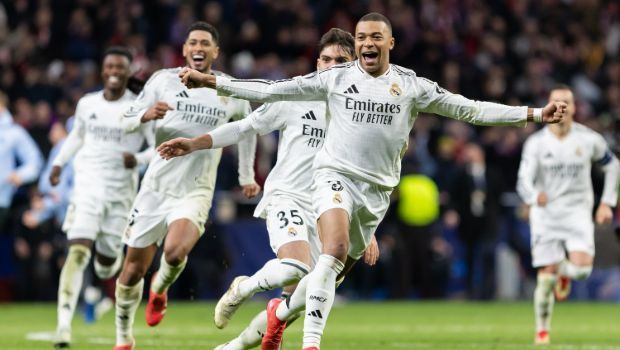
For a club built on winning, elimination always carries consequences. At Real Madrid, those consequences tend to go beyond tactics or results. After their Champions League exit against Bayern Munich, attention has shifted toward something more delicate: the mood inside the dressing room.
The defeat itself was intense and chaotic, marked by key moments. But what lingered after the final whistle wasn’t just the scoreline—it was the visible frustration between two of the team’s biggest stars, Jude Bellingham and Vinicius Junior.
Moments like that don’t necessarily define a season, but they do invite questions.
Late in the match, with the game hanging in the balance, a sequence unfolded that captured the tension. Vinicius carried the ball forward, driving into space with intent. At the same time, Bellingham made a sharp run into the box, clearly expecting a pass that never came.
A slightly heavy touch allowed Dayot Upamecano to intervene, ending the move. What followed wasn’t subtle. Cameras picked up an exchange between the two teammates, with visible frustration and animated gestures.
On the surface, it looked like a typical in-game disagreement—something that happens frequently at the highest level. But context matters.
This wasn’t a routine league fixture. It was a Champions League knockout match, played at the Allianz Arena, with elimination on the line. Emotions were already running high, and the margin for error was minimal.
When players of that caliber clash in that moment, it often reflects deeper pressure rather than a single decision.
That pressure only intensified minutes later when Eduardo Camavinga was sent off. Reduced to ten men, Madrid lost control of the tie, and Bayern capitalized quickly to close the game before extra time became a factor.

From there, frustration spread across the squad.
The final whistle didn’t bring closure—it triggered reactions.
Several Madrid players surrounded referee Slavko Vincic, protesting decisions that they felt had changed the outcome. Among the most vocal were Antonio Rudiger and Vinicius, both expressing their dissatisfaction openly.
Bellingham later addressed the incident, focusing on the red card decision. His comments made it clear that the squad felt the match had been taken out of their control at a critical moment.
That sense of injustice can unify a team—or fracture it, depending on how it’s handled internally.
If the incident stays on the pitch, it becomes part of the competitive edge that drives top teams forward. If it lingers, it can evolve into something more disruptive, especially in a dressing room filled with strong personalities.
For Madrid, managing that balance is critical.
The club isn’t dealing with a rebuild or a transition phase. It’s a team expected to compete for every major title, every season. That level of expectation leaves little room for internal friction.