
























Adapting to the Premier League is rarely straightforward, no matter how strong a player’s reputation may be. Martin Zubimendi is learning that in real time.
The Spanish midfielder arrived at Arsenal with expectations that matched his price tag—just over $65 million after the club moved decisively to secure his signing. But a few months into his first season, the narrative around him has shifted. Performances have been uneven, and scrutiny has followed.
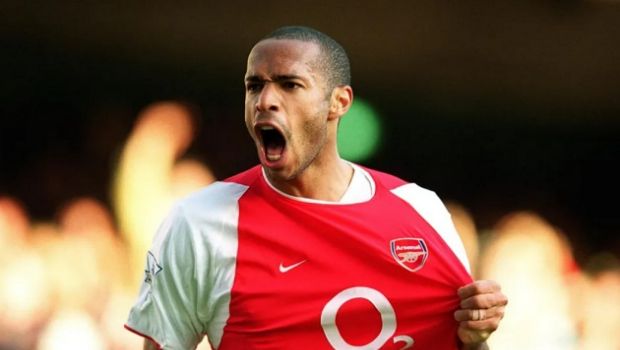
Now, Thierry Henry has stepped in to offer a different perspective.
Rather than focusing on recent mistakes or inconsistent displays, the Arsenal legend is urging patience. His argument is simple: judging a player too early in England’s top flight often leads to the wrong conclusions.
Zubimendi’s season has been defined by contrast.
There have been moments where he looks exactly like the player Arsenal believed they were signing—calm in possession, intelligent in positioning, and capable of controlling the tempo of a game. In those matches, he brings balance to the midfield and allows others to play with more freedom.
But there have also been difficult nights.
In high-profile fixtures, his errors have been more visible. Missed interceptions, slow transitions, or misplaced passes have occasionally led to costly situations. In a league where every mistake is magnified, those moments tend to shape perception quickly.
That’s where the pressure comes in.
At 27, Zubimendi is not viewed as a developing prospect but as a finished product. Fans expect immediate impact, especially when the club invests heavily and fights off competition from teams like Real Madrid to secure a signing.
The conversation has even reached the point where potential replacements are being discussed. Names like Sandro Tonali have been linked, reflecting how quickly the cycle of doubt can begin in elite football.

However, Henry believes that reaction is premature.
Thierry Henry’s defense of Zubimendi is grounded in a comparison that carries weight—Rodri.
When the Manchester City midfielder first arrived in England in 2019, he did not immediately dominate. There were questions about his pace, his adaptation to the league’s intensity, and whether he could anchor a midfield in such a demanding environment.
Today, Rodri is widely considered one of the best in the world in his position. Henry’s point is not that Zubimendi will follow the exact same path.
It’s that adaptation takes time—even for elite players.
The Premier League is not just physically demanding; it is tactically complex and emotionally intense. Matches are played at a speed that requires constant decision-making under pressure. For midfielders, especially those tasked with controlling the game, the margin for error is extremely small.
Zubimendi is adjusting to all of that at once.
Henry also highlighted another reality of playing at a top club: visibility. When you perform well, the praise is immediate. When you struggle, the criticism is just as loud. There is no middle ground.
From his experience, that scrutiny is part of the process.